P – Publisher

PAfter a fun diversion yesterday, I guess I am back at it with a more serious topic! Today I wanted to consider publishers, an industry we have had around probably since the printing press, and which is full of big publishers and independent. I am even helping finalize and edit a book right now which will probably at first just be locally published, at the printer’s, and distributed from there. Hmmm… should make sure we end up with a copy at the library…

As someone who is not published, and not yet at the point to try or be turned down, I am still new and bright-eyed and optimistic about the world of publishing and publishers. Well, other than all of the stories around being turned down by publishers. Those leave one feeling a bit nervous.

Listing myself as a “writer” on Twitter has led to an additionally interesting connection, though, as I see so many authors there, who are talking about their publishing, or else I am seeing the independent (and big) publishers there. Probably a good starting place for figuring out how/where to try to get published, and trying to make a direct connection.

So what advantages do there seem to be with the big publishers? Well, there’s the marketing they have behind them, and their ability to let people know about your book. Whether that’s in publishing catalogs or through all sorts of advertising channels, they can help make these sorts of things happen. I wonder how this relates to getting books at libraries, since there is the added layer of the vendors generally, and of the librarians making decisions.

But increasingly, you have people turning to e-publishing options, which seems to be increasingly dominated by Amazon. Amazon will help promote these books, or at least the ones that get popular, and then they are readily available on the Kindle. And if your goal is “to be published,” this seems like a fantastic route.

By this point in the challenge, however, I have writers and bloggers aplenty reading this site (say thankya), and I would welcome any and all of your thoughts on publishers or the publishing decision process. Self-Publish? Big publishing houses? Independent? Weigh in with your thoughts!

O – Onomatopoeia

OAfter some heavier posts, I am glad I set myself aside a nice, light, fun topic to discuss. Onomatopoeia. Not only a fiendishly difficult word to spell, it is a great element of writing, and language in general. Not remembering what it is from school? To the dictionary!
“The naming of a thing or action by a vocal imitation of the sound associated with it.”

Merriam-Webster Dictionary Online

And would you look at that? According to Merriam-Webster,

Onomatopoeia is currently in the top 1% of lookups and is the 29th most popular word on Merriam-Webster.com.”

What makes this word so popular? Is it the fact that it seems to be taught in classes all around? Is it because the idea of it is so interesting, and everyone is looking for examples? Is it because people are just trying to figure out how the heck to spell it?

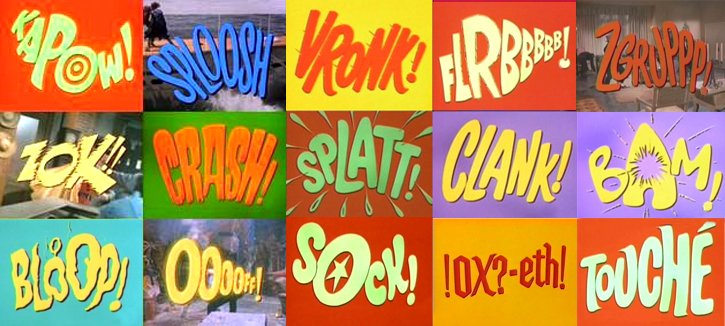
I don’t have the answer, but one of my favorite uses of onomatopoeia would have to actually be the Adam West Batman show, where they would cut away to scenes that just read POW or BAM. Like this!

How about you? What’s your favorite use of Onomatopoeia? And what do you think leads to its popularity in the dictionary? Let me know in the comments below!

N – Newspapers

NI think it’s safe to say it’s been a tough few decades for newspapers. I talked about how Journalism jobs seem to be becoming more specialized and in some ways this makes sense, as the news in general gets smaller and tighter as an industry. But what has led to the steady decline in newspaper business? The obvious answer is our old friend the Internet. But I see a few specific elements that are causing more trouble for newspapers because of the Internet than other industries are seeing – say, books versus e-books.

The obvious one is that the Internet provided a new means of accessing the news, forcing them to react and start to try and provide the news in multiple channels. And, to provide it at an Internet-appropriate speed: so, basically instantly. Not the easiest thing, and for getting your facts straight, for doing good editing, a deadline and publication schedule and time is kind of a useful thing. That changes significantly with the Internet.

And then there’s the fact that search engines arose – increasingly giving people the feeling that they can find things on their own, and don’t need anyone else to do that sort of work for them. All of a sudden, is there as much value in the person doing that work, digging up the stories, reporting on them? When all of a sudden, everyone feels like they can do this.

And then you get people creating the content, too! Bloggers and the like, doing the work for free, on their own time. Saying whatever they want, with no editorial standard. Eroding our expectation of there BEING an editorial standard.

But no, the number one problem facing newspapers, in my opinion, is the fact that people expect things online to be free. Oh, and we don’t really like ads. Why buy a newspaper when the same paper gives the news online for free? So then some of them add pay-walls, and we’re up in arms. Paying for something that costs money to create, and which we used to pay for anyway… I will also say that regularly, the most ad-filled, cluttered websites I have seen are news sites. This has gotten better with time, or else I stopped going to their sites: I’m not sure which it is.

I’ve given a few of my thoughts, and I think these things are hitting newspapers harder than a lot of other types of writing. There’s free fiction online, after all, but I still see the value in paying for a good book. However, the news? If I can’t get it one place for free, I’ll just look elsewhere until I can get it for free. Right? That’s what they’re up against. At least in my opinion – what do you think is their greatest challenge?

M – Music

MI was originally going to write on the topic of Magazines with the letter M, but I think I am beating on Journalism and all a pretty decent amount, and I think I’ll be back at it tomorrow. So for now, let’s change gears, after my question yesterday about Language. I said I would talk about my favorite use of language, so here we are with Music.

I suppose I have written on this subject recently on Comparative Geeks. I love music and song lyrics. From the earlier days of Facebook, when you could put your interests as whatever you wanted to (instead of them being tied to “pages” run by other people), one of mine was “Listening to music without understanding it.” For me, music lyrics are the modern poetry; certainly the popular poetry. We applaud the musician who is also writing their own lyrics. And we’ll probably excuse a lot more because of it.

Music is about creating an emotion, a feeling, a reaction, a mood. Lyrics serve only to enhance that. To replicate that. So the same things can be said: lyrics create an emotion, a feeling, a reaction, a mood. And can tell a story. Some of the most fun is when they do. Better yet is when they tell a story that you haven’t figured out yet – just as much fun as a deep poem with hidden and layered meanings. Am I equating T.S. Elliot to Rush? Maybe. Probably.

More novels should include music in them. I have been super excited that they’ve included songs in the Hobbit movies. And in Game of Thrones! The Bear and the Maiden Fair, anyone? No? How about The Rains of Castamere?

In closing, I think I will return to the Dune quote I used over on Comparative Geeks. The music of life.

WHAT IS SURVIVAL IF YOU DO NOT SURVIVE WHOLE?… WHAT IF YOU NO LONGER HEAR THE MUSIC OF LIFE? MEMORIES ARE NOT ENOUGH UNLESS THEY CALL YOU TO NOBLE PURPOSE!

Leto II, Heretics of Dune

L – Language

LWhen I made my list of A to Z Challenge topics, I came up with things that I could largely remember, knew what I would or could talk about, and that would all be nicely thematic. However, while it’s a nice sounding topic, I cannot for the life of me remember what I was going to write about Language.

I could talk from the philosophical standpoint. About how, without language, how do we think? What do we think? What is it like? Just images? What do words “sound” like to a deaf person? Something that we will likely never be able to explain, constrained as we are by language.

There’s something often talked about – the constraints of language. About how there’s only so much we can describe with it. But how do you tell me what Red looks like? Or for that matter, what a Wine tastes like, though to be fair, those two could really just go together…

But what about the freeing aspects of language? How much more we CAN say because of it, rather than the difficult areas we lack sufficient synaesthesia to explain?

I think this calls for a reader-driven topic for the day. What are some of your favorite uses of language? Let me know in the comments section down below! I think I am going to change up my plans for tomorrow and talk about mine.