R – Realism

RI recently hit back upon the literary terms Realistic and Romantic literature. It was the topic of what is maybe the best blog post I have written. I thought it would be good to consider them a moment here with the A to Z Challenge.

Realistic fiction is, to me, set here in our real world, or very near to it. Here we see people a little like us, or maybe a little not like us, handling situations we might find ourselves in. For me, reading something like this is kind of like playing a sports video game: something that, if I wanted to experience it myself, I would just go out and do it. However, there are plenty of people who read these sorts of works, who love them, all that.

Romantic fiction, meanwhile, is the sort of fiction full of experiences outside of the ordinary. Be it sword and sorcery, space and aliens, steam and gears, angels and demons… You can do whatever you want in romantic literature. This is the realm where geeks live and thrive, and if my other blog Comparative Geeks didn’t give it away, I would definitely call myself a geek. This is my stuff – this is what I consume, what I hope to create, and what I defend when I write posts like this.

And by defend, I mean that there are often cases where large parts of romantic literature are discounted – in academic scholarship, in the “canon” and what is taught in schools, etc. Some of my main frustration, though, comes when dealing with someone who does not *get* the idea of romantic literature, of fantasy and science fiction and fiction in general. The sort of person who is the opposite of me, who reads only realistic works.

Because while I can wholly understand what realistic literature is, what sorts of experiences it might contain within it, and what sorts of characters, that doesn’t mean I have to read it. However, for the person who doesn’t really touch romantic literature – they may not wholly get the idea of it, or the appeal. They often, in my opinion, miss out on the very idea of imagination and fiction in writing. My favorite example is still probably the Da Vinci Code, which had people up in arms against it, as though it was presenting truth. It’s fiction, everybody.

I guess I technically chose the term Realism, so let me close by saying that realism is important in either type of writing. Realism can be created by following realistic chains of cause and effect, or the laws of physics, or a solid understanding of how people act and react, or any number of other subtle or overt measures. And, by removing elements of the real world, it is often even more important that there are elements which hold down realism – like having internally-consistent rules for how magic works within a fantasy universe.

It stands out when realism is thrown out the window, and if done, should be done on purpose. Whether it’s magical realism or adult animated TV shows (The Simpsons, Family Guy, South Park… realism tells us Kenny is assuredly dead), the lack of realism can stand out, and can be used purposefully to tell a story as well.

Oh, and Romantic Literature need not have a romance in it, though that doesn’t seem to stop it from happening…

I feel like I should have a question and I don’t. What are your thoughts on these two large groupings of literature? Let me know!

Q – Quotes

QI love quotes. Not going to lie. And I think most people do – whether it’s to show our fandom, or to use the thoughts of others; whether it’s for an academic purpose to support our thoughts, or for an argumentative one to use our opponents’ words against them. Quotes have power.

When it comes to creating fiction, however, or really any sort of writing – can you ever really know what parts are going to be quoted (if any)? Generally that’s not an element under your control. You don’t know whether you’ll be taken out of context, or people will catch a mistake, or catch that one phrase you worked really hard on. Many of the most influential academic papers tend to be ones with an important theory presented or word created or explained – which are often elements that happen early in the set-up of the paper, and rarely as the purpose of the whole paper. But these parts stick, even as the purpose is forgotten.

For fiction writing, I think that the go-to case study when it comes to quotes is Dune by Frank Herbert. In Dune, every chapter begins with a quote from somewhere in the science-fictional universe Herbert created – whether it is a quote from a history book (generally written after the time described in the book), or an ancient (though future for us) proverb, or a cultural proverb, or a quote from one of his characters from a scene we are not presented. There are poems and songs.

Herbert breathed life into this universe, and created one of the most lasting pieces of science fiction – and really the genre-defining work – in part by creating the important quotes of that world. The sorts of things the people would say, or turn to; the research in the world; the arts and writings. And by having these moments outside of the plot, though often enhancing the plot, he showed that this was a universe wholly realized and fleshed-out. He gave it substance.

What is the son but an extension of the father? To quote Dune. Brian Herbert kept this tradition going, and it is interesting to see it continued. It is a fantastic writing exercise and thought experiment. And though it would be hard to include quotes like this in another book without being compared directly to Dune, it would be good to be thinking about it: what sorts of quotes would exist in the world you are creating? Or what quotes would you like your readers to take away? Have those in mind, even if you don’t include them directly in the work!

Oh, and I found this collection of Dune quotes online.

[Edit]: And how could I forget this Dune quotes gem: http://calvinanddune.tumblr.com/

P – Publisher

PAfter a fun diversion yesterday, I guess I am back at it with a more serious topic! Today I wanted to consider publishers, an industry we have had around probably since the printing press, and which is full of big publishers and independent. I am even helping finalize and edit a book right now which will probably at first just be locally published, at the printer’s, and distributed from there. Hmmm… should make sure we end up with a copy at the library…

As someone who is not published, and not yet at the point to try or be turned down, I am still new and bright-eyed and optimistic about the world of publishing and publishers. Well, other than all of the stories around being turned down by publishers. Those leave one feeling a bit nervous.

Listing myself as a “writer” on Twitter has led to an additionally interesting connection, though, as I see so many authors there, who are talking about their publishing, or else I am seeing the independent (and big) publishers there. Probably a good starting place for figuring out how/where to try to get published, and trying to make a direct connection.

So what advantages do there seem to be with the big publishers? Well, there’s the marketing they have behind them, and their ability to let people know about your book. Whether that’s in publishing catalogs or through all sorts of advertising channels, they can help make these sorts of things happen. I wonder how this relates to getting books at libraries, since there is the added layer of the vendors generally, and of the librarians making decisions.

But increasingly, you have people turning to e-publishing options, which seems to be increasingly dominated by Amazon. Amazon will help promote these books, or at least the ones that get popular, and then they are readily available on the Kindle. And if your goal is “to be published,” this seems like a fantastic route.

By this point in the challenge, however, I have writers and bloggers aplenty reading this site (say thankya), and I would welcome any and all of your thoughts on publishers or the publishing decision process. Self-Publish? Big publishing houses? Independent? Weigh in with your thoughts!

O – Onomatopoeia

OAfter some heavier posts, I am glad I set myself aside a nice, light, fun topic to discuss. Onomatopoeia. Not only a fiendishly difficult word to spell, it is a great element of writing, and language in general. Not remembering what it is from school? To the dictionary!
“The naming of a thing or action by a vocal imitation of the sound associated with it.”

Merriam-Webster Dictionary Online

And would you look at that? According to Merriam-Webster,

Onomatopoeia is currently in the top 1% of lookups and is the 29th most popular word on Merriam-Webster.com.”

What makes this word so popular? Is it the fact that it seems to be taught in classes all around? Is it because the idea of it is so interesting, and everyone is looking for examples? Is it because people are just trying to figure out how the heck to spell it?

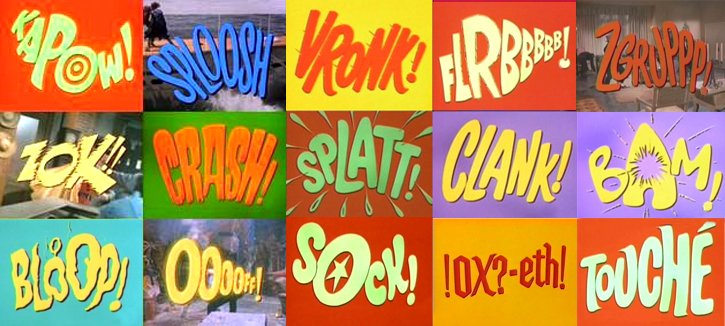
I don’t have the answer, but one of my favorite uses of onomatopoeia would have to actually be the Adam West Batman show, where they would cut away to scenes that just read POW or BAM. Like this!

How about you? What’s your favorite use of Onomatopoeia? And what do you think leads to its popularity in the dictionary? Let me know in the comments below!

N – Newspapers

NI think it’s safe to say it’s been a tough few decades for newspapers. I talked about how Journalism jobs seem to be becoming more specialized and in some ways this makes sense, as the news in general gets smaller and tighter as an industry. But what has led to the steady decline in newspaper business? The obvious answer is our old friend the Internet. But I see a few specific elements that are causing more trouble for newspapers because of the Internet than other industries are seeing – say, books versus e-books.

The obvious one is that the Internet provided a new means of accessing the news, forcing them to react and start to try and provide the news in multiple channels. And, to provide it at an Internet-appropriate speed: so, basically instantly. Not the easiest thing, and for getting your facts straight, for doing good editing, a deadline and publication schedule and time is kind of a useful thing. That changes significantly with the Internet.

And then there’s the fact that search engines arose – increasingly giving people the feeling that they can find things on their own, and don’t need anyone else to do that sort of work for them. All of a sudden, is there as much value in the person doing that work, digging up the stories, reporting on them? When all of a sudden, everyone feels like they can do this.

And then you get people creating the content, too! Bloggers and the like, doing the work for free, on their own time. Saying whatever they want, with no editorial standard. Eroding our expectation of there BEING an editorial standard.

But no, the number one problem facing newspapers, in my opinion, is the fact that people expect things online to be free. Oh, and we don’t really like ads. Why buy a newspaper when the same paper gives the news online for free? So then some of them add pay-walls, and we’re up in arms. Paying for something that costs money to create, and which we used to pay for anyway… I will also say that regularly, the most ad-filled, cluttered websites I have seen are news sites. This has gotten better with time, or else I stopped going to their sites: I’m not sure which it is.

I’ve given a few of my thoughts, and I think these things are hitting newspapers harder than a lot of other types of writing. There’s free fiction online, after all, but I still see the value in paying for a good book. However, the news? If I can’t get it one place for free, I’ll just look elsewhere until I can get it for free. Right? That’s what they’re up against. At least in my opinion – what do you think is their greatest challenge?